We Use CookiesWe use cookies to enhance the security, performance,
functionality and for analytical and promotional activities. By continuing to browse this site you
are agreeing to our privacy policy
7 Best 100 Mile Range Walkie Talkies
From leading brands and best sellers available on the web.By clicking on a link to a third party's website, log data is shared with that third party.


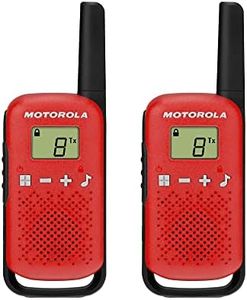

Buying Guide for the Best 100 Mile Range Walkie Talkies
Choosing a walkie-talkie with a long range, such as a 100-mile model, can be a great solution for outdoor adventures, group activities, or work in large areas where cell service may be unreliable. However, it's important to understand that the advertised range is often based on ideal conditions, and real-world performance can vary. To find the best walkie-talkie for your needs, you should look at several key specifications and think about how and where you plan to use the device.RangeRange refers to the maximum distance over which two walkie-talkies can communicate clearly. Manufacturers often advertise very high ranges, like 100 miles, but these are usually measured in perfect conditions with no obstacles. In real life, buildings, trees, hills, and even weather can reduce the effective range. If you plan to use your walkie-talkie in open areas like mountains or fields, you may get closer to the advertised range, but in cities or forests, expect much less. Think about where you'll use the device most often and choose a model that offers reliable performance in those environments, rather than just the highest number.
Frequency Band (UHF vs VHF)Walkie-talkies operate on different frequency bands, mainly UHF (Ultra High Frequency) and VHF (Very High Frequency). UHF is better for use in urban areas or indoors because it penetrates walls and obstacles more effectively. VHF works well in open outdoor spaces with fewer obstructions. If you need your walkie-talkie for hiking, camping, or rural use, VHF might be suitable. For city use or inside buildings, UHF is usually the better choice. Consider your main environment to decide which frequency band fits your needs.
Power OutputPower output, measured in watts, affects how far your walkie-talkie can transmit. Higher wattage generally means a longer range, but it also uses more battery. Most consumer walkie-talkies range from 0.5 to 5 watts. If you need to cover large distances or challenging terrain, a higher wattage can help, but remember that legal limits may apply in your area. For casual or short-range use, lower wattage is usually enough and helps conserve battery life.
Battery LifeBattery life tells you how long the walkie-talkie can operate before needing a recharge or new batteries. This is important if you'll be away from power sources for long periods. Some models use rechargeable batteries, while others use standard AA or AAA batteries. If you plan to use your walkie-talkie for extended trips, look for models with long battery life or the ability to swap batteries easily. Your usage pattern—short daily use versus all-day adventures—should guide your choice.
Weather ResistanceWeather resistance means the walkie-talkie can handle exposure to rain, dust, or even being dropped. This is especially important for outdoor use. Devices are often rated with an IP (Ingress Protection) code, which tells you how well they resist water and dust. If you expect to use your walkie-talkie in tough conditions, look for a higher IP rating. For mostly indoor or fair-weather use, this may be less important.
Channels and Privacy CodesChannels are the different frequencies you can use to communicate, and privacy codes help reduce interference from other users. More channels and privacy codes mean you have a better chance of finding a clear line for your group. If you’ll be using your walkie-talkie in crowded areas or events, having more options can be very helpful. For private or remote use, fewer channels may be sufficient.
Size and WeightThe size and weight of a walkie-talkie affect how easy it is to carry and use. Larger models may offer more features or longer battery life, but can be bulky. Smaller, lighter models are easier to carry but may have fewer features. Think about how you’ll carry the device—on a belt, in a backpack, or in a pocket—and choose a size that fits your comfort and needs.